Author Archives: earthmuffinmom

Unknown's avatar

About earthmuffinmom

I am a Christian mom and wife who is watching and waiting impatiently for the Lord's return in a world that is getting nuttier by the day. My main interests are in the areas of Biblical end times/eschatology and early Genesis/creation. To understand the end...you must understand the beginning! My other passion is health and healing! Our family has also been greatly blessed over the past several years with healing through natural health and diet (generally Paleo/grain free). I love sharing this information with other people, and helping folks in their healing journeys. That being said...I am not a doctor...so I'm not responsible for any decisions you may make in regards to your own health. Other stuff: I am married to a wonderful man who I have had the privilege of having three beautiful children with. We have been married for over sixteen years. I work full time, but have the blessing of working from my home, and I homeschool my oldest child. We enjoy homesteading...and while we live in a small, rural town...we have worked hard to develop our yard into a "little bit of country in town"...complete with our "farm dog," Buddy, and five chickens. Thanks for checking out my blog!

Salsa Verde (GAPS/SCD/GF)

Standard

We got hooked on salsa verde awhile back…became particularly big fans of the Xochitl brand (Iif you haven’t had their corn chips and can…you should!  It’s the only food I really miss on GAPS!).  At $5.99 a jar…keeping up the addiction got a little steep.  🙂  So…last summer I started making my own.

Working with tomatillos is a little bit of a process…but it’s so worth it.  This year, I planted three tomatillo plants and have harvested a TON.  Last weekend, we made a double batch of this recipe adapted from one in a back issue of Organic Gardening magazine:
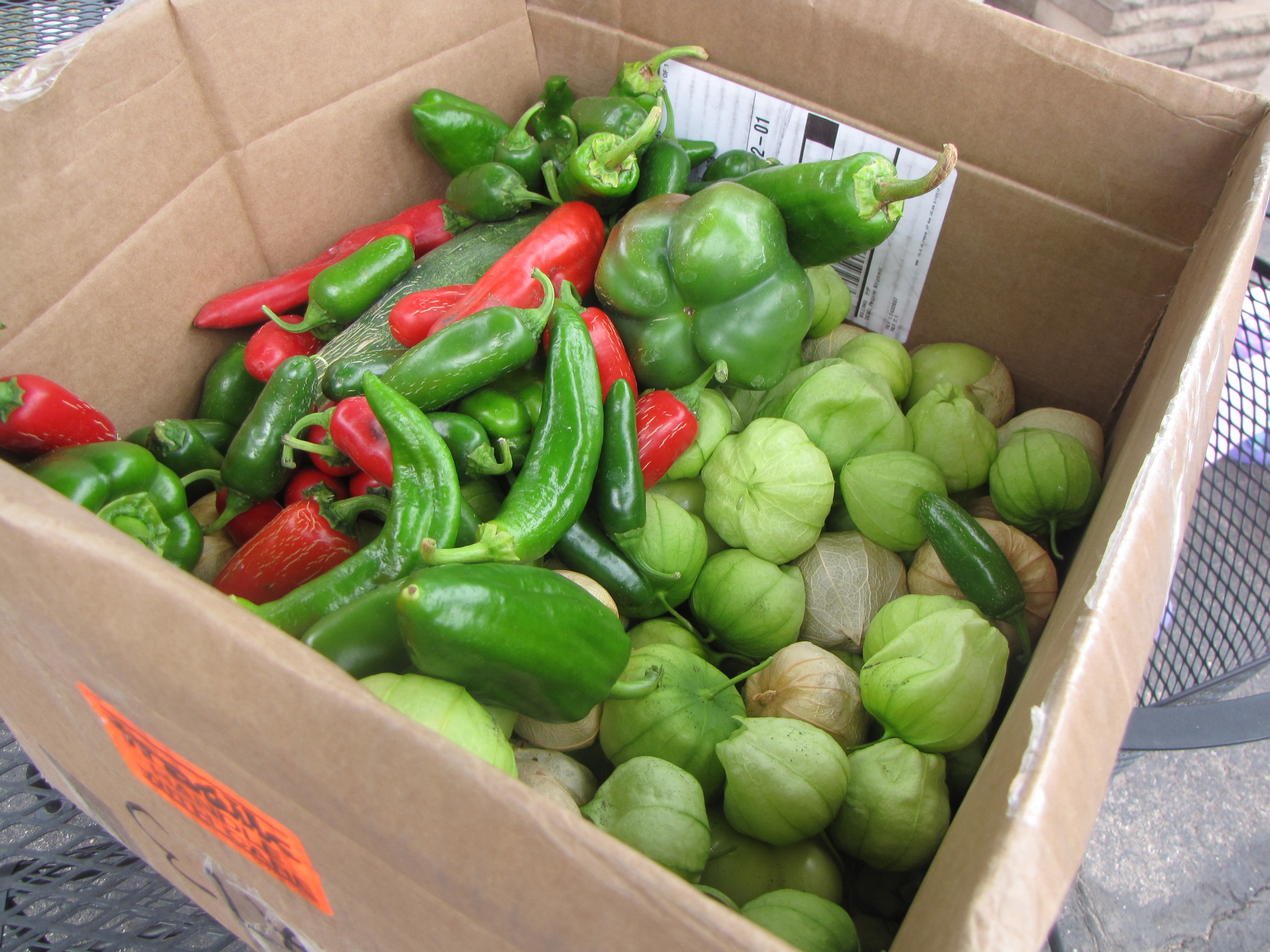
Salsa Verde (GAPS/SCD/GF):

5 pounds of tomatillos, husked and halved

2 onions, quartered

3 cloves of garlic

1 1/2 T. sea salt

1 habanero chile pepper, seeded (***BEWARE!  Just chopping this made me have a coughing fit!  Always wear plastic gloves when cutting hot peppers to preserve your hands and anything they touch for the next several hours!)

4 Anaheim peppers, seeded

2-4 Jalapeno peppers, seeded (depending on personal preference)

2 green peppers, seeded

2 T. fresh cilantro

Juice of one lime

I had some good help with picking the tomatillos…

And removing the husks…even got Grandpa into the act there…
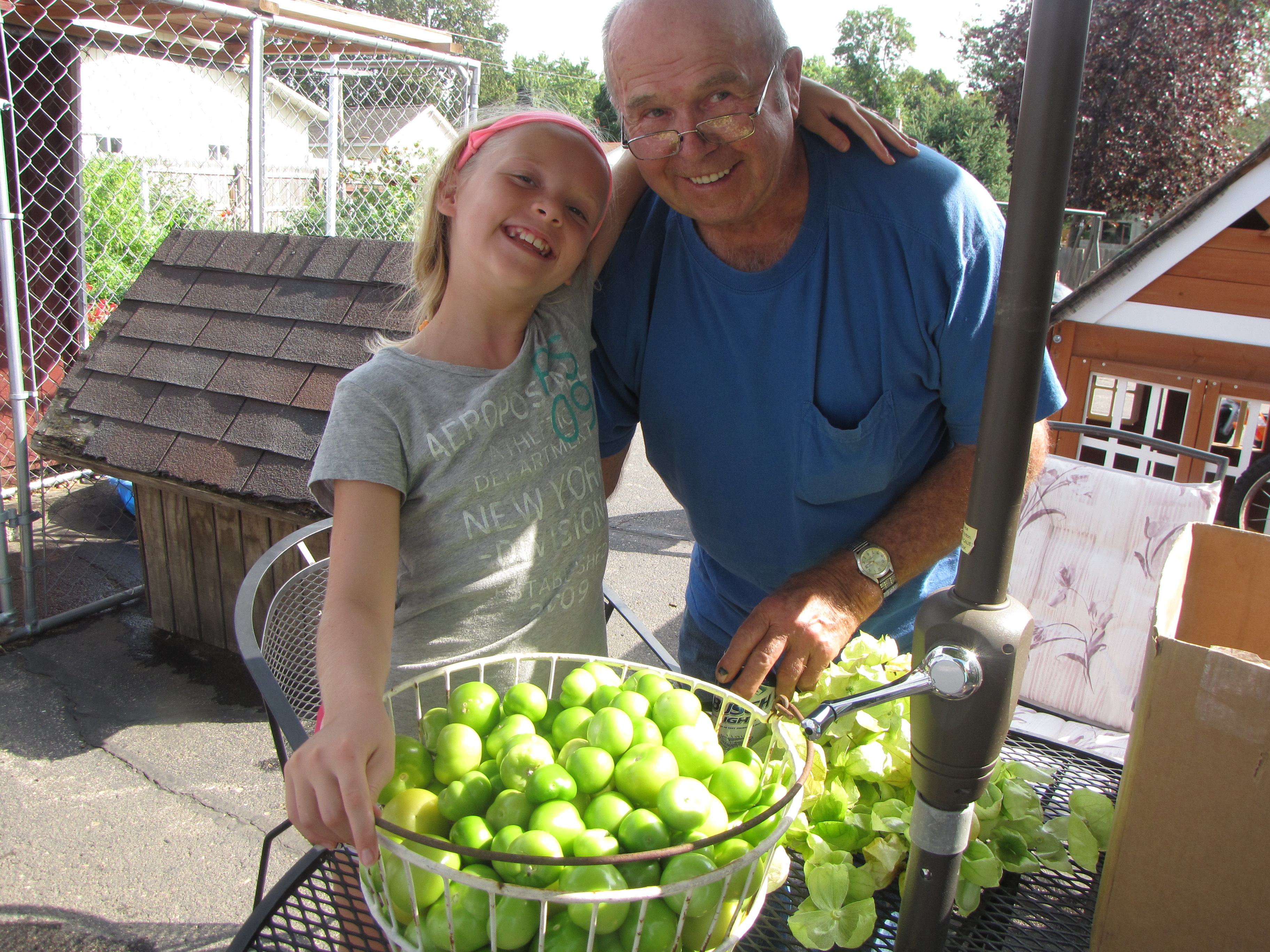
And then I was on my own… 🙂

My easy-peasy semi-lazy woman’s way of tweaking this great recipe:  Rinse the sticky film off the tomatillos.  I decided not to roast them (because I was also in the midst of making sauerkraut and pickles and that just seemed like a lot of work), and ran everything through the food processor in shifts until it was well chopped and mixed.  I cooked it in a large stock pot on the stove until boiling, and simmered about 20 minutes – stirring every few minutes (this may be overkill, but I’ve been the victim of burnt salsa before!).

Ladle salsa into hot sanitized jars, leaving 1/2 inch headspace.  Check for air bubbles, wipe the rims clean and put on lids and rings.  Process in boiling water bath for 15 minutes.  If you haven’t canned before, be sure that the middle of the lid has a “depression” instead of a raised appearance when it’s done.  If it doesn’t, either reprocess the jars in a boiling water bath, or stick in fridge for more immediate use.  If everything has sealed like it should, let them sit out for about a day before removing the rings and storing them.

And if anyone is wondering, this salsa does have a slight kick but it will not burn the hair off your head or anything wild like that. 🙂  It has a medium heat.  If you want it hotter, add another habanero or two…we are not that brave…
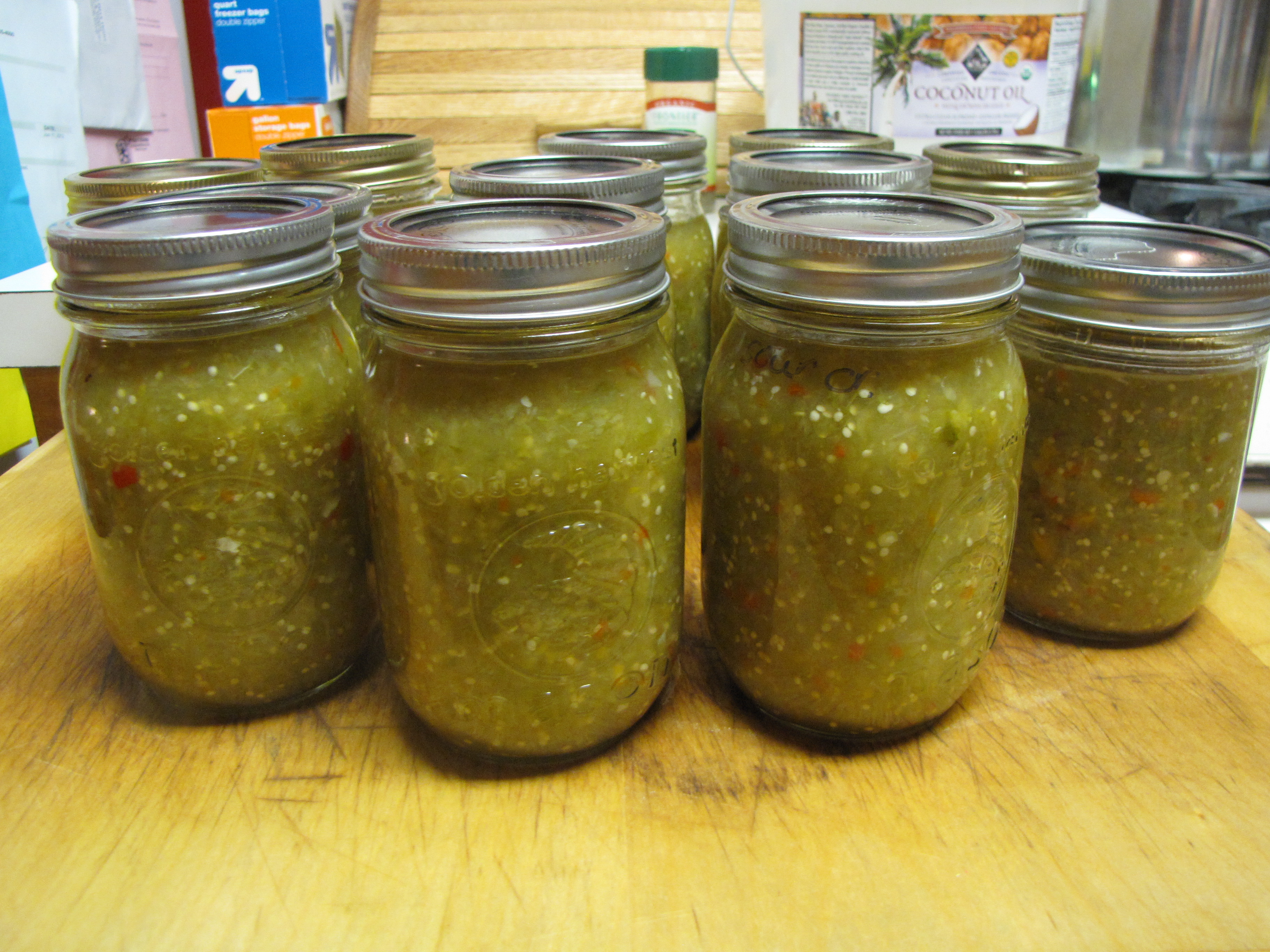
Disclaimer:  My kitchen was VERY VERY BUSY on the day I made these and that last picture reflects it…please ignore the mess in the background!!!

This post was shared at Butter Believer’s Sunday School; The Morris Tribe’s Homesteader Blog Carnival; Simply Made Home’s Make  a Move Monday; The Healthy Home Economist’s Monday Mania; Living with Food Allergies and Celiac Disease Made from Scratch Monday; The Prairie Homesteader’s Homestead Barn Hop; Real Food Forager’s Fat Tuesdays; Simply Sugar and Gluten Free Slightly Indulgent Tuesdays; Cooking Traditional Foods Traditional Tuesdays; Like a Mustard Seed’s Living Green Tuesdays; The Tasty Alternative’s Allergy Free Wednesdays; Frugally Sustainable’s Frugal Days, Sustainable Ways; Kelly the Kitchen Kop’s Real Food Wednesdays; GNOWFGLINS Simple Lives Thursday; The Nourishing Gourmet’s Pennywise Platter; Real Food Freaks Freaky Friday; Too Many Jars in My Kitchen’s Fill Those Jars Friday; Vegetarian Mamma’s Gluten Free Fridays; The 21st Century Housewife’s Gallery of Favorites;

Honeyed Bread and Butter Pickles (GAPS/SCD/GF)

Standard

My eldest daughter has been asking me for the bread and butter pickles that I used to make during our pre-GAPS days.  Those pickles predate any healthy living efforts we have made as they had OODLES of white death (oops, I meant white sugar). These days, things like that are out of the question as we are all feeling pretty darned good and wish to keep it that way… 🙂  So…imagine the happiness in the house when I came across this recipe in the Grit Country Skills Series issue of “Guide to Backyard Bees and Honey“…

Honeyed Bread and Butter Pickles (GAPS/SCD/GF)

4 1/2 pounds pickling cucumbers, sliced 1/4″ thick

2 pounds yellow onions (I used red, it’s what I had), peeled and sliced 1/4″ thick

1/4 c. non-iodized salt

2 c. honey

3 c. cider vinegar

2 tsp yellow mustard seed

1/4 tsp whole cloves

1/2 tsp turmeric

1/4 tsp celery seed

Mix cucumbers and onions with salt.  Let stand 6 hours.

Soak in water to cover for 1 hour; drain thoroughly.  Set aside.

In small stainless steel or enamel saucepan, bring honey, vinegar and spices to a boil.  Remove from heat and cover pan to keep contents hot.

Pack vegetables firmly into hot, sterilized pint jars, filling to 1/4″ from tops.

Add honey mixture, filling to 1/4: from tops.  Wipe rims of jars; top with hot lids (I boil mine first – don’t even know why, my mother in law taught me to do it!).  Screw on bands.

Place jars on rack in canning kettle of hot water.  (I don’t have anything fancy, just a big black $5 Kmart special enamel kettle that allows for enough water to cover the jars…and truthfully, I don’t even have a rack!)  Add water if needed to bring water level to 1″ above tops of jars.  Bring water to a rolling boil, and boil for 15 minutes.  Remove jars carefully and cool on wire rack (or a folded up dish towel works nicely too).

Just got done making these – I ended up with 9 pints total and had to make a second batch of the honey vinegar liquid to take care of the rest (the original recipe said 7 pints).  My jars are popping, and that is a great sound!  Aren’t they pretty???

This post was shared at Butter Believer’s Sunday School Blog Carnival; The Healthy Home Economist’s Monday Mania; The Morris Tribe’s Homesteader Blog Carnival; The Better Mom’s Mondays Link Up; The Prairie Homestead’s Homestead Barn Hop; Living with Food Allergies and Celiac Disease’s Made from Scratch Monday; Real Food Forager’s Fat Tuesday;  Simply Sugar and Gluten Free’s Slightly Indulgent Tuesdays; Like a Mustard Seed’s Living Green Tuesdays; Cooking Traditional Foods Traditional Tuesdays; The Tasty Alternative’s Allergy Free Wednesdays; Simply Made Home’s Make a Move Monday; Frugally Sustainable’s Frugal Days, Sustainable Ways; Kelly the Kitchen Kop’s Real Food Wednesdays; GNOWFGLINS Simple Lives Thursday; The Nourishing Gourmet’s Pennywise Platter; Real Food Freaks Freaky Friday; Too Many Jars in My Kitchen’s Fill Those Jars Friday; Our Little Coop’s Coop Hop; Vegetarian Mamma’s Gluten Free Friday;

Book Review and a Lactoferment: Daikon Radish Pickles

Standard

I love the book “The Urban Homestead” by my favorite homesteading couple, Kelly Coyne and Erik Knutzen.  Not only do they have a multitude of wonderful homesteading “how to’s”…they can talk about preparing for the zombie apocalypse with humor. 🙂

They have so many great ideas!  They give the details on starting your own mini farm, canning and food preservation, DIY alternative energy sources for your homestead (with a little help, my son just made a rainwater barrel for a Cloverbud 4H fair project), baking bread from scratch, make-your-own cleaning aides and keeping livestock in the city (which I happen to be really fond of!) and on and on…  If you are even remotely interested in being more self-sufficient and living more sustainably…this is the book for you!

I am a big fan of lactofermentation…and when I saw the following recipe, I knew I had to try them!  Before modern day canning, or the ability to freeze, people preserved their vegetable harvest through the lactofermentation process.  Lactic microbial orgamisms create an environment that is acidic and won’t allow bacteria that causes food spoilage to live.  This process also creates alot of beneficial, living, probiotic organisms in your food.  Contrary to popular belief – not all bacteria are bad. 🙂  On the GAPS Diet, we are supposed to eat a lot of fermented foods as a means to reintroduce beneficial bacteria to the gut…and one can only eat so much kraut and kimchi so it was nice to find something else for variety!

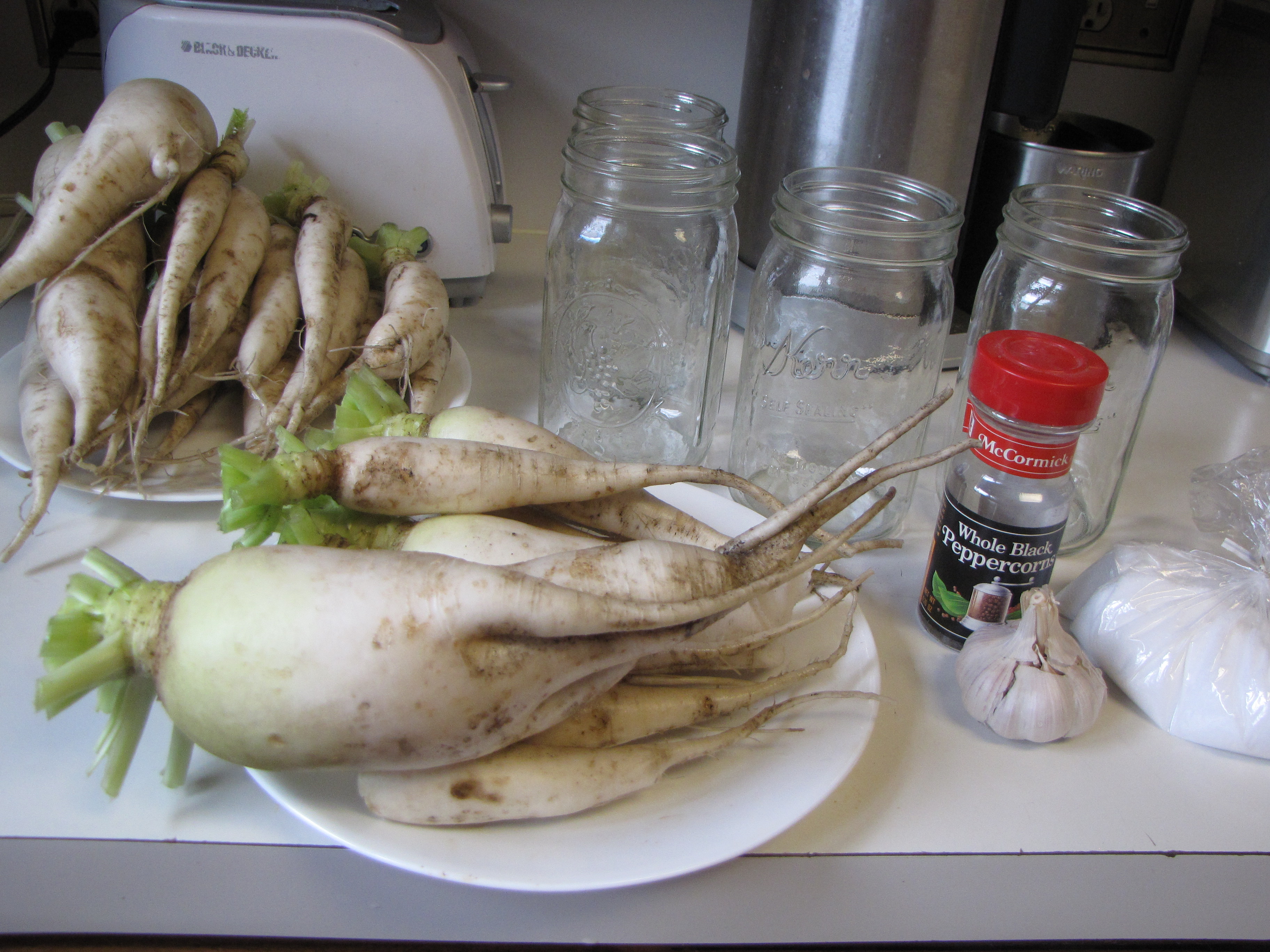
The following recipe is for one quart.  This year, I grew daikon radishes in my garden and had a TON – so I made several quarts.  Just adjust the following recipe to suit your needs:

Daikon Radish Pickles from “The Urban Homestead”

Ingredients:

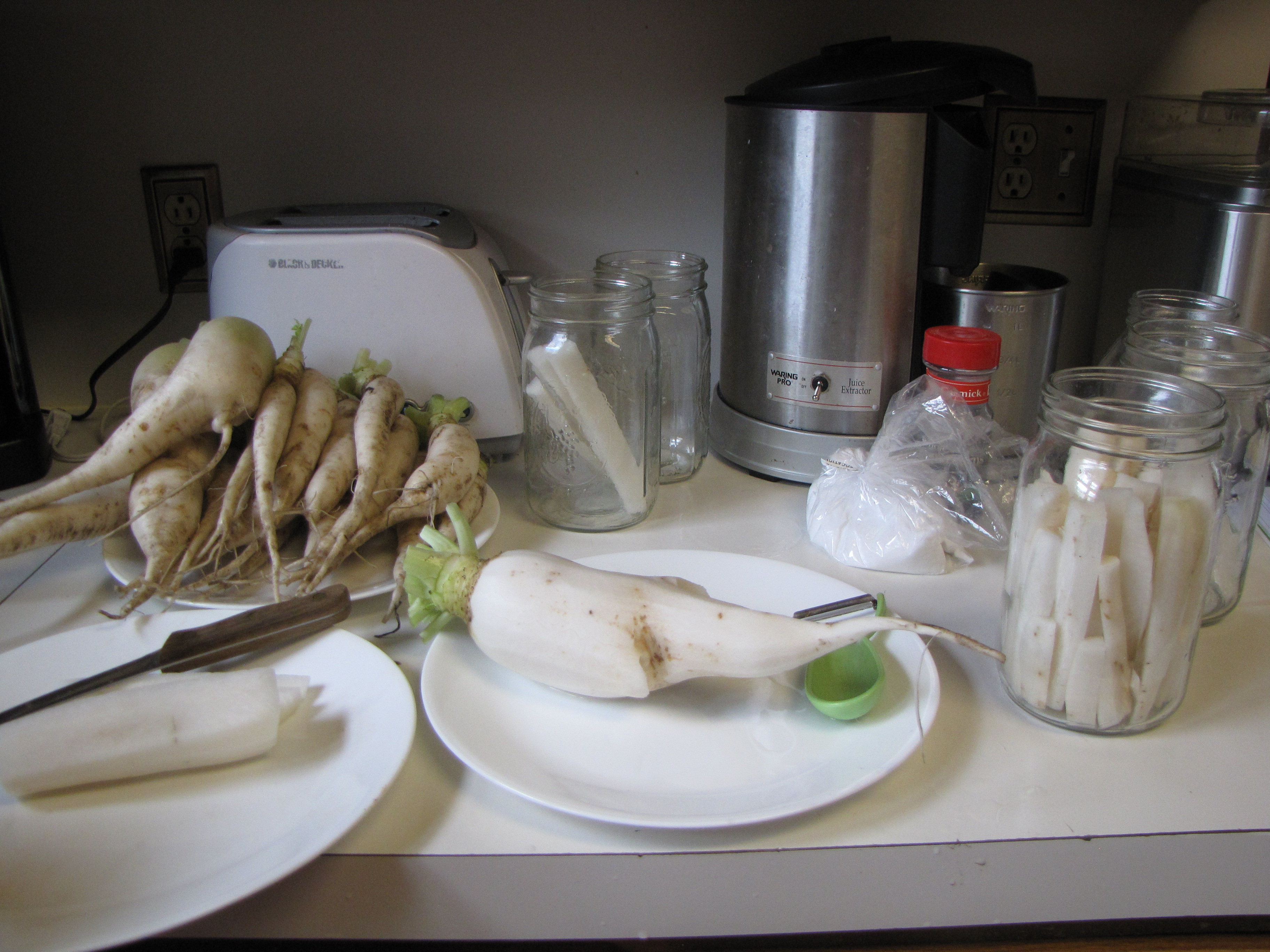
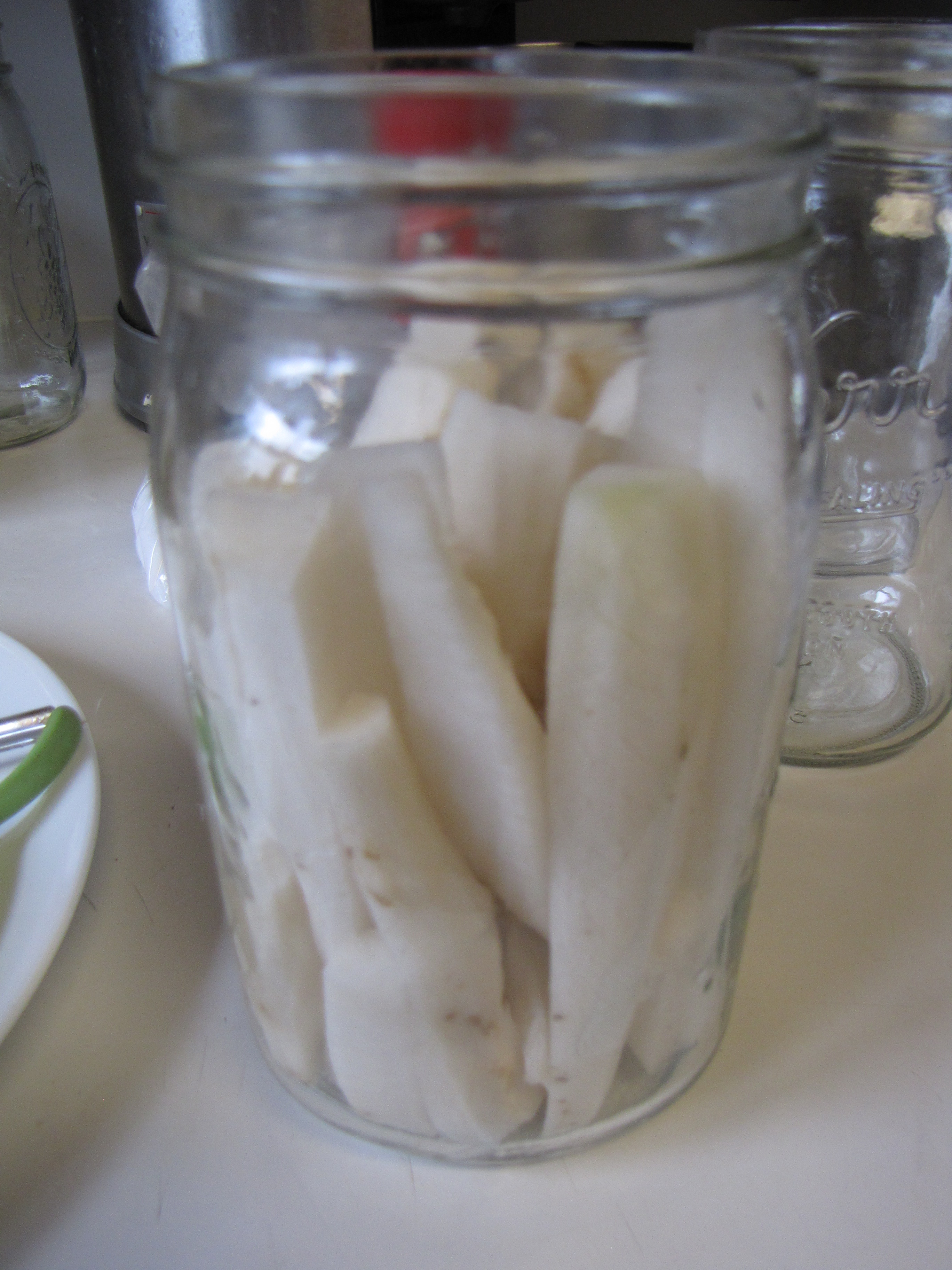
**Daikon radish – enough to fill a quart jar – one big one is usually enough.  Kelly and Erik recommend that you cut them into rounds, quarters or matchsticks – however, I did spears and they did turn out ok.

**One peeled garlic clove and a few peppercorns.  The garlic odor/flavor is assertive, so skip the garlic if you’re not a fan.

**Two tablespoons (or more) of sea salt or any salt that is not iodized.  Iodized salt will kill lactobacillus bacteria and interfere with the fermentation process.

**One quart of water.  Bottled or filtered is best, but the authors have used tap successfully.

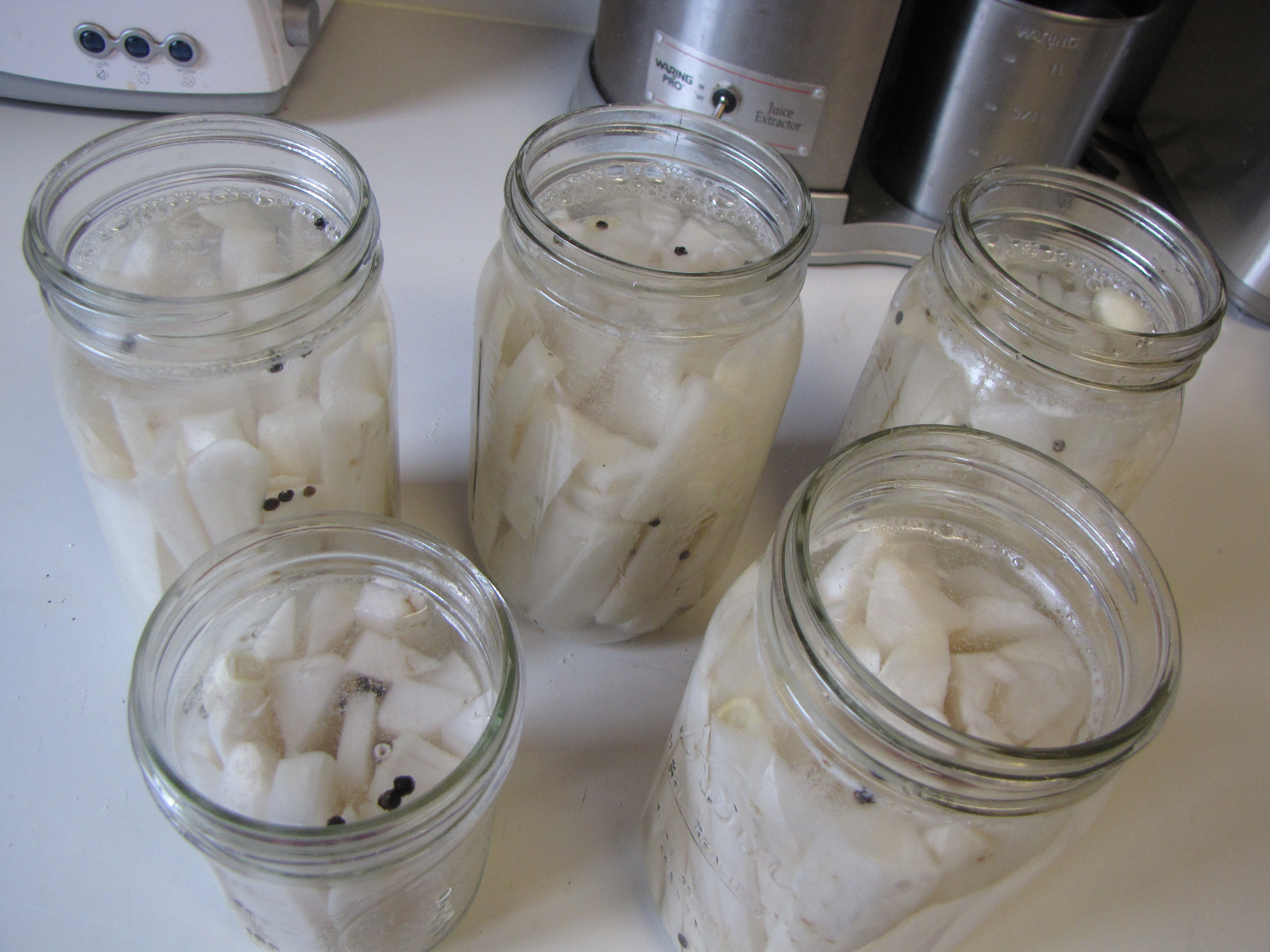
Fill a sterilized quart-sized canning jar with your sliced daikon, and a clove of garlic if you like, and a few peppercorns.  Mix your salt and water together in a separate container and pour it into the jar over the daikon slices, leaving a little breathing space at the top, about a quarter of an inch.  Make sure to pack the radishes tightly, and also that the radishes remain submerged as this is an important key to avoiding spoilage.

Close the jar tight, and put it in a cool, dark cabinet.  The flavor changes over time, so try opening different jars at different times to see what stage of fermentation you prefer.  The earliest you should try would be three or four days after bottling, the authors usually wait a week or so.  **On a personal note, I left them for a week and when I do them again, I think I’ll try them around four days.  I had one jar that looked kind of funky and I threw it out, but the rest were good.  It was also really hot out, and warm in my house, when I did these and I think that makes a difference.

When you open it there might be some fizzing, which is normal.  My garlic also turned blue, which I also understand to be normal and okay.  The pickles should be crunchy (but not raw, definitely transformed) and pleasantly garlic-flavored.  If they are a little too salty for your taste, you can rinse off the brine before you eat them.  Keep the opened or unopened jars in the fridge to extend the life of your pickles.

**Food safety note.  I know there is alot of controversy over whether to use mason jars or not in lactofermentation.  While a Harsch crock (or other pickling system) is on my Christmas list – I don’t have one now.  If they are:  mushy, funky smelling, moldy or anything else that looks like you shouldn’t eat it…don’t.  The one jar I threw out had turned yellowish…and while it may have been fine, I didn’t want to take the chance.  And if you are uncomfortable with the whole lactofermentation process…you can always go through the canning process but know that the living, beneficial organisms will be killed off.  The Ball Blue Book is a good resource for that type of canning.

Enjoy!

This post was shared at the Healthy Home Economist’s Monday Mania; The Morris Tribe’s Homesteader Blog Carnival; The Better Mom’s Mondays Link Up; The Prairie Homestead’s Homestead Barn Hop; Living with Food Allergies and Celiac Disease Made from Scratch Monday; Real Food Forager’s Fat Tuesdays; Simply Sugar and Gluten Free’s Slightly  Indulgent Tuesdays; Cooking Traditional Foods’ Traditional Tuesdays; Kelly the Kitchen Kop’s Real Food Wednesdays; Frugally Sustainable’s Frugal Days, Sustainable Ways; The Tasty Alternative’s Allergy Free Wednesdays; The Nourishing Gourmet’s Pennywise Platter; GNOWFGLINS Simple Lives Thursday; Real Food Freaks Freaky Friday; The Liberated Kitchen GAPS Friendly Fridays; The 21st Century Housewife’s Gallery of Favorites; Too Many Jars in My Kitchen’s Fill Those Jars Friday; Butter Believer’s Sunday School Blog Carnival.